You don’t become a safe driver the day you pass. You become one in the weeks and months before it.
Most learners focus on one goal: Pass Your Test. That’s fair. But the real win isn’t the certificate, it’s building habits that keep you calm, aware, and prepared long after the L-plates come off. That’s where Defensive Driving comes in.
If you learn to think defensively before you qualify, you won’t just scrape through your driving test, you’ll stand out during it. And more importantly, you’ll drive with confidence in real traffic, not just under exam conditions.
Here are six practical ways to Practice Defensive Driving before you even book your practical.
1. Start Reading the Road, Not Just the Car in Front
New drivers tend to focus on what’s directly ahead. Defensive drivers scan further.
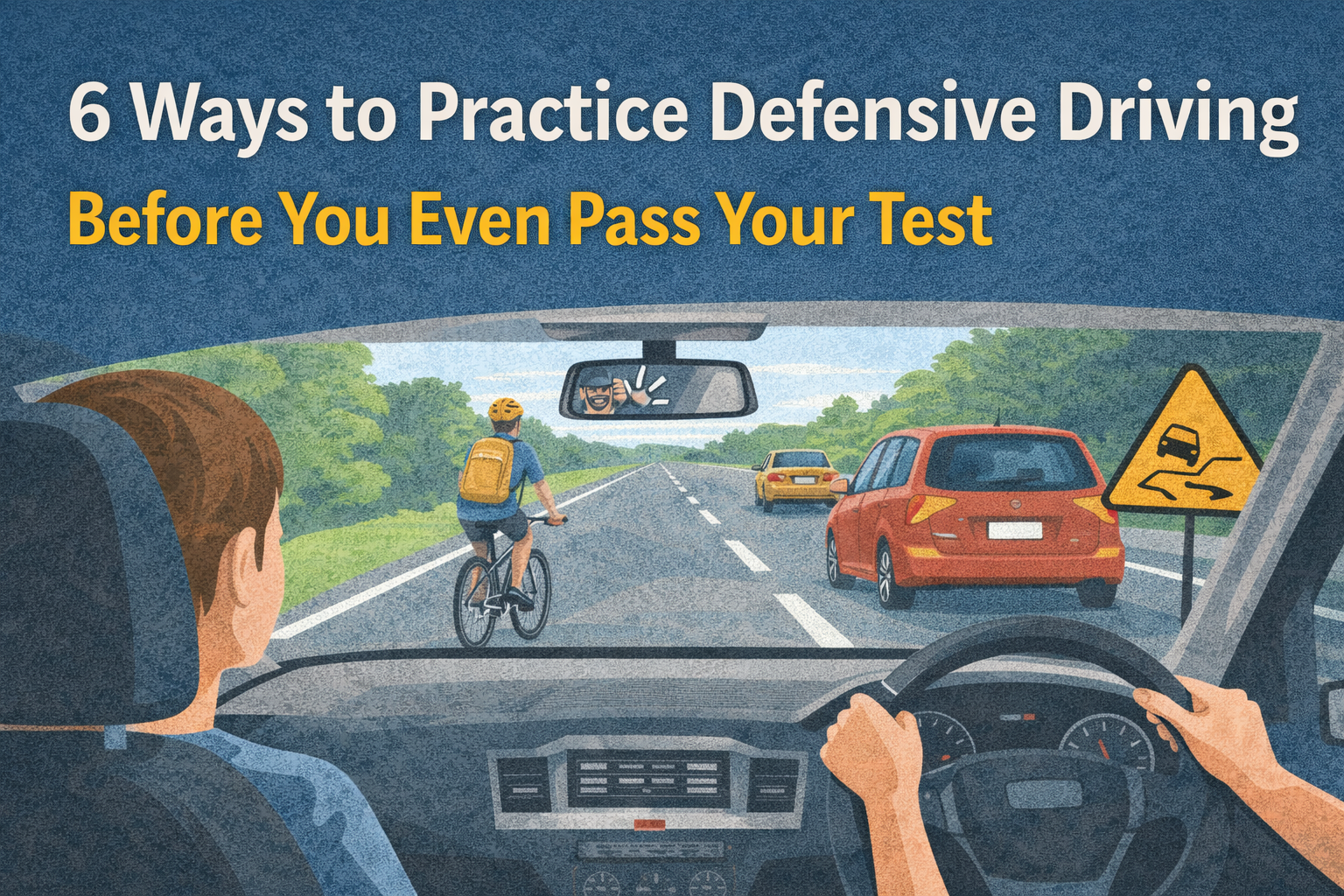
When you’re learning, begin developing the habit of looking 12–15 seconds ahead. Check brake lights in the distance. Notice pedestrians near crossings. Watch side roads for rolling wheels that signal a car about to pull out.
This early awareness is a core part of Defensive Driving. It gives you time to react smoothly instead of braking sharply at the last second.
Examiners notice this too. During your driving test, forward planning shows maturity behind the wheel, something that helps you Pass Your Test without racking up minor faults.
Simple exercise:
While driving, quietly predict what might happen next.
“Blue car may change lanes.”
“Pedestrian might step out.”
“Traffic lights could change.”
That mental rehearsal strengthens your reaction time.
2. Master Safe Following Distance (Even When Others Don’t)
You’ve heard of the two-second rule. Defensive drivers actually use it.
Keeping a safe distance isn’t just about rules; it’s about control. Tailgating leaves no room for error. And when you’re a learner, space equals confidence.
If someone cuts in front of you? Resist the urge to close the gap. Back off calmly. That’s Defensive Driving in action, choosing safety over ego.
This habit matters hugely if you want to Pass Your Test. Examiners mark closely for following distance, especially at higher speeds. Maintaining consistent spacing shows awareness and judgement.
Practice tip:
Pick a fixed object (like a signpost). When the car in front passes it, count: “One thousand one, one thousand two.” If you reach the object before finishing, you’re too close.
It sounds simple. It works.
3. Expect Mistakes From Other Drivers
Here’s a hard truth: not everyone on the road drives well.
Part of learning how to Practice Defensive Driving is accepting that other drivers may:
-
Forget to indicate
-
Drift between lanes
-
Brake suddenly
-
Speed through roundabouts
Instead of reacting emotionally, prepare for it.
If you see a car edging forward at a junction, assume it might pull out. Ease off slightly and cover the brake. That small adjustment can prevent panic later.
Defensive drivers don’t assume perfection from others. They prepare for imperfection.
And during your driving test, this mindset can save you from being caught out by someone else’s mistake helping you stay calm enough to Pass Your Test.
4. Learn to Control Speed, Not Just Obey Limits
Driving at the speed limit isn’t always the safest choice.
Rain. Narrow roads. Parked cars. School zones. These require judgement.
A key principle of Defensive Driving is adjusting your speed based on conditions, not pressure from the car behind you.
Many learners struggle here. They feel pushed. They speed up unnecessarily. That’s when errors creep in.
Instead:
-
Ease off earlier before bends
-
Slow down when visibility drops
-
Approach roundabouts ready to stop
When you Practice Defensive Driving, you realise smooth and controlled driving feels better than rushed and reactive driving. Examiners prefer safe and steady over fast and confident-looking.
5. Stay Calm When Something Goes Wrong
Stalled the car? Missed a gear? Took the wrong turn? It happens.
What matters is your response.
Defensive drivers stay composed under pressure. They fix the issue safely and continue.
One of the most underrated ways to Practice Defensive Driving is to intentionally simulate small challenges during lessons:
-
Practice hill starts repeatedly
-
Drive unfamiliar routes
-
Try busier areas gradually
The more controlled discomfort you face while learning, the more resilient you become. This resilience is powerful on test day. Many learners don’t fail due to lack of skill, they fail due to nerves after a small mistake. If you want to Pass Your Test, treat every lesson like preparation for the unexpected.
If nerves sometimes creep in while you’re building these habits, read our guide “Driving Anxiety is Real: 7 Learner Tips That Actually Help” for practical ways to stay calm and focused behind the wheel.
6. Build Hazard Perception Into Every Drive
Hazard perception isn’t just a theory test module. It’s real-life awareness.
As a driving learner, make it a habit to constantly ask:
-
What could change here?
-
Who might move suddenly?
-
Where are the escape spaces?
For example:
-
Near parked cars, expect doors to open.
-
Near cyclists, expect swerves.
-
Near buses, expect hidden pedestrians.
This level of awareness is the heart of Defensive Driving. And when you Practice Defensive Driving consistently, you stop reacting late and start anticipating early. That shift makes driving feel smoother and far less stressful.
Why Defensive Driving Helps You Pass (And Stay Safe After)
Many learners believe the goal is simply to meet the minimum standard required to Pass Your Test. But minimum standard drivers struggle later.
When you train with Defensive Driving principles from the start, three things happen:
-
You reduce risky habits before they form.
-
You feel more confident in unpredictable situations.
-
You become a safer independent driver immediately after passing.
Examiners assess more than technical ability. They assess awareness, decision-making, and road positioning. Defensive drivers naturally score well because their habits align with what examiners want to see.
Defensive Driving Is a Mindset, Not a Module
You don’t wait until after qualifying to learn safety. You build it into every lesson.
Whether you’re reversing into a bay, approaching a roundabout, or joining a dual carriageway, ask yourself:
Am I reacting… or anticipating? That question alone will help you Practice Defensive Driving every time you sit behind the wheel.
And when test day comes, you won’t just hope to Pass Your Test. You’ll know you’ve prepared properly.
Final Thoughts: Train for the Driver You Want to Be
Your driving test lasts around 40 minutes. Your driving career lasts decades.
Defensive habits learned early can prevent accidents, reduce insurance stress, and make every journey more controlled. So while you’re working toward your licence, don’t just learn how to drive. Learn how to think with Road Skills.
Because the learners who focus on Defensive Driving before they qualify often become the safest drivers long after they pass.