Learning to drive is a big step, and one of the first things most people want to know is simple: how much do driving lessons cost in the UK?
The tricky part is that there isn’t a single fixed price. Costs vary depending on where you live, the type of car you choose, and how quickly you learn. What you’ll find here is a clear, realistic breakdown based on actual 2026 prices so you can budget properly and avoid surprises later.
Quick Answer:
So, how much do driving lessons cost in the UK overall? While hourly rates typically fall between £45 and £52, your total cost depends on how many lessons you need, how often you practise, and the quality of instruction you choose.
You’ll still see cheaper options advertised at £35–£40, but in most areas, especially around Farnborough, Camberley, and Fleet, those lower prices usually come with trade-offs in structure or availability.
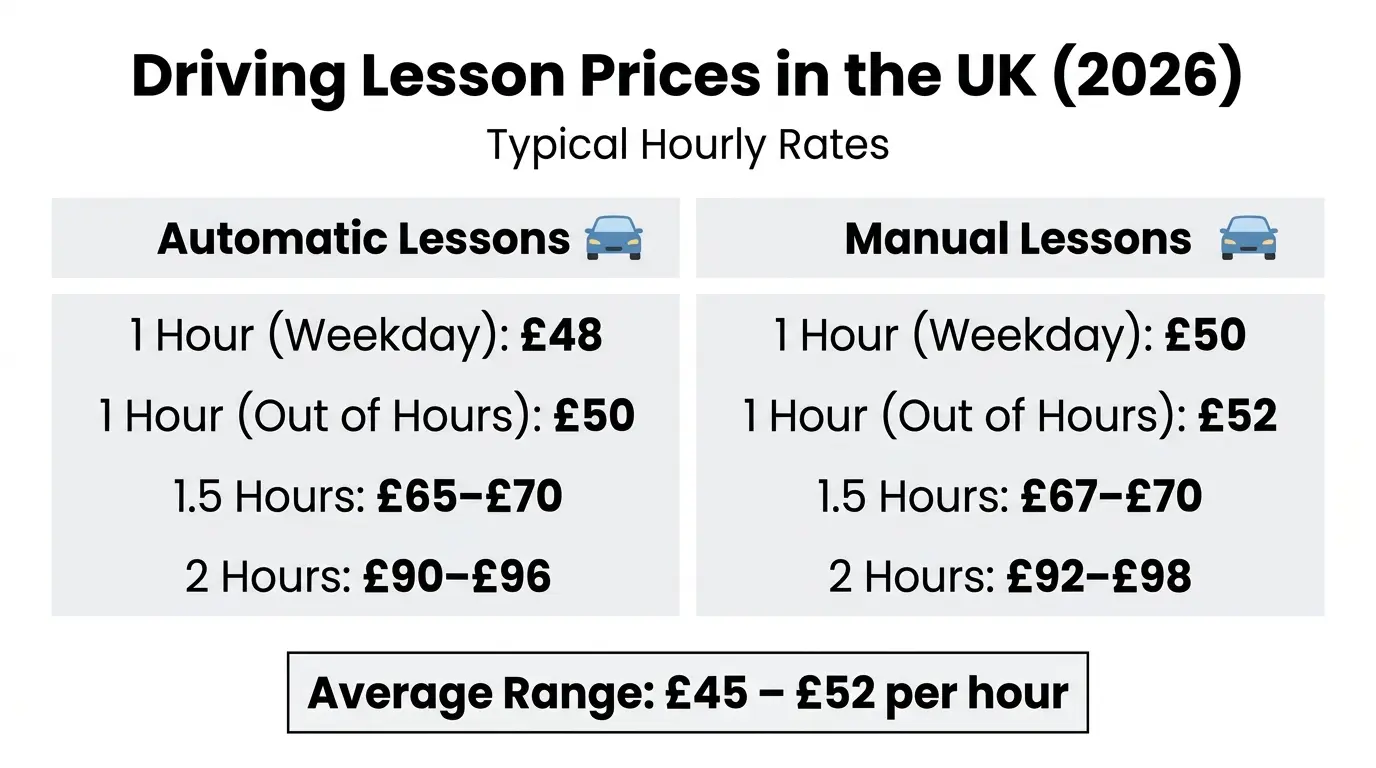
At the same time, automatic lessons tend to start from around £48 per hour, while manual lessons are slightly higher, often beginning at £50 per hour.
A useful way to think about it is this: you’re not just paying for an hour in the car, you’re paying for how quickly you get to test standard. A slightly higher hourly rate with a structured instructor can often mean fewer lessons overall.
How Much Do Driving Lessons Cost in the UK in 2026?
To get a clearer idea of what you’ll actually pay, it’s better to look at real lesson pricing rather than relying on broad averages. Prices can vary slightly depending on timing and lesson length, but there’s a consistent structure across most driving schools.
For automatic lessons, weekday sessions tend to be slightly cheaper, while evening and weekend sessions come at a small premium. As you move to longer sessions, the cost per hour often improves, making them better value overall.
- 1 hour (weekday): £48
- 1 hour (out of hours): £50
- 1.5 hours: £65–£70
- 2 hours: £90–£96
Manual lessons follow a very similar pattern, although they’re typically priced a little higher. The difference isn’t huge, but it’s noticeable when you compare like-for-like sessions.
- 1 hour (weekday): £50
- 1 hour (out of hours): £52
- 1.5 hours: £67–£70
- 2 hours: £92–£98
Most learners begin with one-hour lessons to get comfortable, but as confidence grows, longer sessions tend to be more effective. You spend less time getting started and more time actively driving, which helps build skills faster and can reduce the total number of lessons needed.
Mock Test & Test Day Costs
One area that often gets overlooked is the cost just before your test.
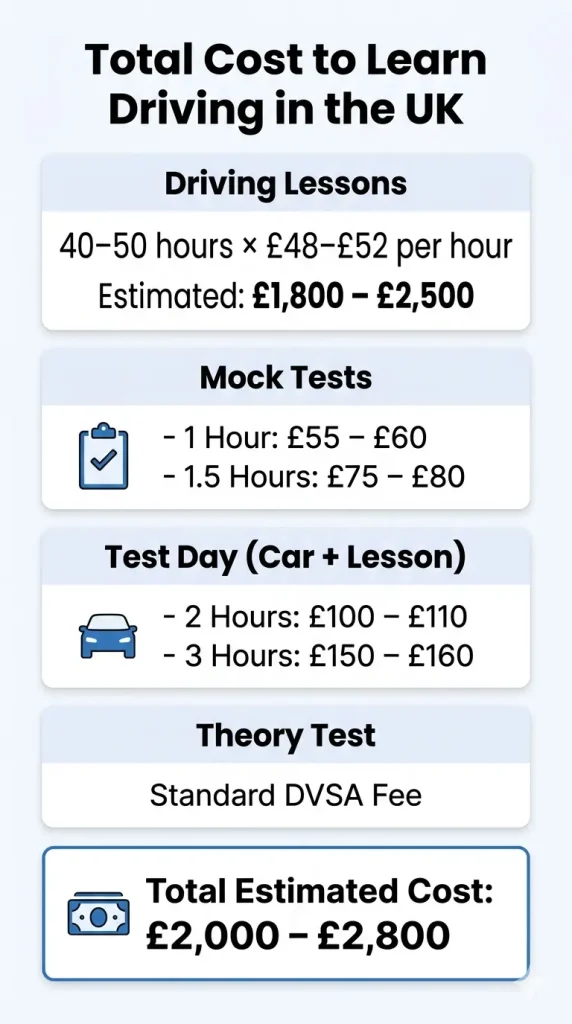
A mock driving test is designed to mirror the real exam and usually costs between £55 and £60 for one hour, or £75 to £80 for a longer session. While it might seem like an extra expense, it can save money by reducing the chances of failing.
On test day itself, most learners use their instructor’s car. This typically includes a warm-up lesson and the test slot, with prices around:
- £110 for a 2-hour package
- £160 for a 3-hour package
That warm-up drive before the test can make a real difference, especially when it comes to managing nerves and avoiding common mistakes on the day.
Automatic vs Manual: Which Is Cheaper Overall?
At first glance, manual lessons look slightly more expensive per hour. But the real comparison isn’t that simple. Automatic cars are easier to handle for many learners because there’s no clutch or gear changes to worry about. That can mean fewer lessons for some people, which balances out the slightly higher hourly cost.
Manual lessons, on the other hand, give you a full licence, allowing you to drive both manual and automatic cars. That flexibility is often worth considering. In the end, the better option is the one that gets you test-ready faster, not just the one with the lowest hourly rate.
When people ask how much do driving lessons cost in the UK, they’re usually thinking about these exact hourly rates but the real cost becomes clearer when you look at the full learning journey.
If you’re unsure which option suits you, it’s worth understanding how different learning approaches can affect your overall driving journey.
How Much Do Driving Lessons Cost in the UK in Total?
When you put everything together, the total cost becomes clearer.
Most learners need around 40 to 50 hours of professional lessons, although this can vary depending on your learning pace (see exactly how many lessons most learners need in the UK). You can also check DVSA guidance on learning time for new drivers. At current rates, that usually comes to somewhere between £1,800 and £2,500.
Once you add in mock tests, the practical test, and the theory test, the overall cost typically lands between £2,000 and £2,800. If you need to retake the test, the total can rise further. That’s why investing in proper preparation early on often works out cheaper.
When you factor in the theory test, it’s worth checking the official fee set by the DVSA so you know exactly what to budget for.
Why Driving Lesson Prices Vary
If you’ve seen a wide range of prices online, there’s a reason for it.
Instructor experience plays a big role, and choosing the right instructor early can significantly reduce both your learning time and overall cost. More experienced instructors with strong pass rates tend to charge more, but they often help learners progress faster. Location also matters, with busier areas generally costing more.
Lesson structure is another factor. Short, inconsistent lessons can slow progress, while longer, well-planned sessions tend to deliver better results.
How to Reduce Your Driving Lesson Costs
Saving money on driving lessons isn’t about cutting corners, it’s about learning efficiently, and there are proven ways to reduce your total cost without slowing your progress.
One of the simplest ways to reduce costs is to take longer lessons once you’re comfortable. A two-hour session gives you more time to practise and improves retention between lessons. Consistency also matters. Learners who take lessons regularly tend to need fewer hours overall, as they don’t lose momentum between sessions.
If possible, combining lessons with private practice can make a big difference too. Even short practice drives help reinforce what you’ve already learned.
What You Get for the Price (Value Breakdown)
It’s easy to focus only on the hourly rate, but there’s more included than most people realise.
A driving lesson covers the use of a dual-control vehicle, fuel, insurance, and maintenance. On top of that, you’re getting structured teaching from a qualified instructor who is guiding you towards the test standard.
With Road Skills, that also includes flexible scheduling, structured lesson planning, and focused preparation for the driving test itself. The aim isn’t just to help you pass, it’s to help you pass confidently.
Driving Lessons with Road Skills
Road Skills offers a range of lesson options designed to suit different learning styles and schedules.
You can choose between one-hour, 90-minute, or two-hour sessions, with both weekday and out-of-hours availability. Lessons are available in both manual and automatic cars, depending on your preference.
For learners who want better value, bulk lesson packages are available. For example, a 9-hour package starts from around £371, while larger packages such as 12 or 15 hours offer further savings.
If you’re aiming to pass quickly, intensive courses are also an option. These range from 10-hour packages at around £680, up to 35-hour courses priced at approximately £2,140, including lessons and test preparation.
There are also introductory packages available, giving you a chance to get started without committing to a full course straight away.
Are Cheap Driving Lessons Worth It?
It’s tempting to go for the lowest price, especially at the beginning. But cheaper lessons often come with trade-offs.
A lack of structure or clear feedback can slow your progress, which is one of the main reasons many learners struggle or fail their first driving test. In many cases, that ends up costing more than starting with a slightly higher-quality instructor.
How Many Lessons Will You Need?
The number of lessons varies from person to person, but there are some general patterns.
Fast learners who practise regularly may be ready in around 30 to 35 hours, especially if they follow a structured approach similar to those who pass the first time. Most learners fall into the 40 to 50-hour range, while those with longer gaps between lessons may need more.
Regular practice and consistent lessons make the biggest difference.
Final Verdict: What You Should Expect to Pay
In 2026, a realistic expectation is:
- Around £48–£52 per hour for quality lessons
- Around £2,000–£2,800 in total to pass
The key is not to focus purely on price, but on value, choosing lessons that help you progress efficiently.
By now, you should have a clear idea of how much driving lessons cost in the UK and what you can realistically expect to pay from start to finish.
Ready to Start Driving?
If you’re planning to start lessons, the best approach is to begin with a structured plan and understand the basics before your first session.
Road Skills offers flexible lesson options across Farnborough, Fleet, Aldershot, and surrounding areas, making it easier to find something that fits your schedule.
Frequently Asked Questions
Can I start driving lessons before passing my theory test?
Yes, you can start practical lessons without passing your theory test first. However, passing it early allows your instructor to focus fully on driving skills and helps you reach the test standard faster.
Is it better to take weekly or intensive driving lessons?
Weekly lessons suit most learners and help build skills steadily. Intensive courses can work if you’re short on time, but they require focus and consistency to be effective.
Do longer driving lessons help you pass faster?
In many cases, yes. Longer lessons give you more time to practise without interruptions, which improves confidence and reduces the total number of sessions needed.
Are driving lesson prices expected to increase in the UK?
Prices have gradually increased due to fuel, insurance, and demand for instructors. It’s likely costs will continue to rise slightly, so starting sooner can help you avoid paying more later.
What should I look for when choosing a driving instructor?
Look for someone with a good pass rate, clear teaching style, and structured lessons. A reliable instructor can make a big difference in how quickly and confidently you pass.